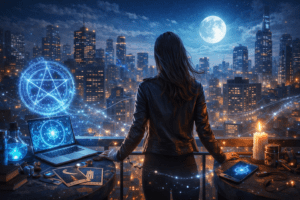
When Darkness Dances with Light
The cursor blinks mockingly on the blank page. Your mind feels like static. You’ve been staring at the same paragraph for twenty minutes, and the words refuse to flow. Sound familiar? Every creator knows this maddening dance with creative blocks, that suffocating feeling when inspiration seems locked away behind an impenetrable wall.
But what if another productivity hack or writing technique doesn’t solve the problem? What if the secret lies in something as simple as the time of day you choose to create?
As darkness begins its gentle embrace of daylight, something extraordinary happens in the creative mind. The transition between day and night. That liminal space photographers call the “magic hour”, holds profound secrets for unlocking breakthrough creativity. This idea isn’t a mere romantic notion; it’s a phenomenon rooted in both neuroscience and the deep patterns of human consciousness.
The concept of twilight as a creative catalyst has captured imaginations across cultures and centuries. From ancient storytellers who spun their tales around flickering fires to modern artists who find their muse in the purple-tinged sky, the magic hour represents more than just beautiful lighting. It means a fundamental shift in how our brains process information and generate ideas.
The Science Behind Twilight’s Creative Power
The human brain operates on sophisticated rhythms, and twilight represents one of the most fascinating transitions in our daily neurological cycle. During these liminal hours, our minds undergo subtle but significant changes that create optimal conditions for creative thinking.
Consider how your mental state naturally shifts as evening approaches. The analytical, task-focused mindset that dominates daylight hours begins to soften. Your prefrontal cortex, the brain’s executive center responsible for logical thinking and inhibition, starts to relax its grip. This neurological shift creates what researchers call “cognitive disinhibition,” a state where unconventional connections and creative insights become more accessible.
Think about your own experience with late-night conversations or those moments just before sleep when profound thoughts seem to emerge from nowhere. These aren’t random occurrences; they’re the result of your brain’s natural transition into what neuroscientists call the “default mode network”, a state of neural activity associated with introspection, imagination, and creative insight.
The twilight hours also trigger changes in brain wave patterns. As external stimuli decrease and internal reflection increases, our brains shift from beta waves (associated with active thinking and problem-solving) toward alpha waves (linked to relaxed awareness and creative flow). This transition creates what many describe as a “soft focus” state of consciousness, perfect for allowing new ideas to emerge organically.
Furthermore, the reduction in blue light exposure during twilight naturally increases melatonin production, which doesn’t just prepare us for sleep. Early melatonin release creates a unique neurochemical environment that enhances pattern recognition and associative thinking—two crucial components of creative breakthrough.
The Magic Hour in Action: When Creativity Awakens
The power of twilight creativity extends far beyond theoretical neuroscience. Throughout history, countless breakthrough moments have emerged during these magical transition hours. The dimming light dissolves the barriers between conscious thought and deeper wells of inspiration.
Consider the ritual many writers unconsciously develop: the evening writing session. As the day’s responsibilities fade and the world grows quiet, words begin to flow with surprising ease. The harsh judgment of daylight thinking softens, allowing vulnerable truths and bold ideas to surface. This phenomenon isn’t a coincidence; it’s the magic hour working its neurological alchemy.
The phenomenon becomes even more pronounced when we examine the connection between twilight and what psychologists call “liminal thinking.” Liminal spaces, those threshold moments between one state and another, naturally foster creative breakthroughs. Twilight represents the ultimate liminal experience, suspended between the concrete reality of day and the dream-like possibilities of night.
Many creators report that their most innovative ideas arrive during these threshold moments. The solution to a complex problem suddenly crystallizes during an evening walk. A perfect metaphor emerges while watching the sunset. A breakthrough in artistic technique reveals itself in the soft glow of dusk. These aren’t isolated incidents; they’re manifestations of the brain’s enhanced creative capacity during transitional states.
The magic hour also provides natural protection from one of creativity’s greatest enemies: the inner critic. The same neurological changes that enhance creative thinking also quiet the harsh voice of self-judgment. In twilight’s gentle embrace, ideas can emerge without immediately facing the scrutiny of analytical thinking. This temporary suspension of criticism creates the psychological safety necessary for genuine creative risk-taking.
Perhaps most importantly, twilight naturally induces what researchers call “soft attention”, a relaxed, receptive state of awareness that allows subtle connections to emerge. Unlike the focused attention required for analytical tasks, creative breakthroughs often require this softer, more diffuse form of consciousness. The magic hour provides this state almost effortlessly.
Practical Strategies for Harnessing Twilight Creativity
Understanding the science behind twilight creativity is only the beginning. The real magic happens when you learn to cultivate and harness these natural neurological shifts deliberately. Creating a consistent practice around magic hour creativity can transform your creative output and relationship with inspiration.
The foundation of effective twilight practice lies in establishing what you might call “creative twilight rituals.” These aren’t rigid structures but rather gentle frameworks that signal to your brain that it’s time to shift into creative mode. The ritual might begin with stepping away from screens and artificial light sources, allowing your eyes and mind to adjust to the natural rhythm of fading daylight.
Environmental factors play a crucial role in maximizing twilight creativity. The space where you create during these hours should feel distinct from your daytime work environment. This new space might mean moving to a different room, adjusting lighting to match the natural twilight outside, or simply changing your physical position. The goal is to create a sensory environment that reinforces the brain’s natural transition into creative mode.
Temperature and comfort also matter more during twilight sessions than many realize. As your body prepares for evening rest, maintaining gentle warmth becomes critical for sustaining creative flow. A cozy blanket, warm beverage, or comfortable clothing can help keep the relaxed state necessary for breakthrough thinking.
The type of creative work you choose for magic hour sessions should align with the brain’s natural capabilities during this time. Rather than forcing analytical or highly structured tasks, focus on activities that benefit from associative thinking and intuitive insight. Free-writing, brainstorming, conceptual problem-solving, and exploratory artistic work all thrive during these hours.
Timing your twilight sessions requires attention to your chronotype and the natural light cycles in your location. The magic hour typically begins about an hour before sunset and extends roughly thirty minutes past, but individual variations exist. Some people find their creative sweet spot earlier in this window, while others discover their peak inspiration arrives as darkness fully settles.
Creating boundaries around your magic hour practice becomes essential for maintaining its effectiveness. These boundaries mean protecting these precious hours from the intrusion of urgent tasks, social media, or the lingering demands of daytime responsibilities. The brain needs permission to transition into creative mode fully, and this permission comes through conscious boundary-setting.
Documentation strategies during twilight sessions should feel organic rather than forced. Keep a simple notebook or voice recorder nearby, but avoid the temptation to analyze or organize every idea that emerges immediately. The goal is to capture inspiration without disrupting the creative flow that twilight naturally provides.
Overcoming Common Obstacles and Resistance
Despite the natural advantages of twilight creativity, many people encounter resistance when trying to establish a consistent magic hour practice. Understanding these common obstacles and developing strategies to overcome them is crucial for long-term success.
The most frequent objection centers around time management. Modern life consumes evening hours with family obligations, social commitments, and the endless stream of digital distractions. The key lies in reframing twilight creativity not as another task to squeeze into an already packed schedule, but as a fundamental investment in your creative well-being and long-term productivity.
Many people also struggle with what might be called “evening guilt”, the feeling that productive, creative work should happen during traditional daytime hours. This misconception stems from industrial-age thinking that equates creativity with conventional productivity. In reality, creativity operates on different rhythms, and honoring these natural cycles often leads to more authentic and powerful creative output.
The challenge of consistent energy levels during evening hours affects many potential twilight creators. After a full day of work and responsibilities, the idea of engaging in creative activity can feel daunting. The solution lies in understanding that twilight creativity requires a different type of energy, not the forceful push of daytime productivity, but the gentle receptivity of evening consciousness.
Perfectionism poses another significant obstacle to effective twilight practice. The relaxed state of magic hour consciousness naturally produces rougher, more exploratory work than the polished output of focused daytime effort. Learning to value this raw creative material as essential to the creative process, rather than dismissing it as inferior, becomes crucial for maintaining motivation.
Technology presents both opportunities and challenges for twilight creativity. While digital tools can enhance creative practice, the blue light emission from screens can disrupt the natural neurological transitions that make twilight so powerful for creativity. Finding the right balance, perhaps using warm-light modes, paper-based tools, or voice recording, helps preserve the magic hour’s natural advantages.
Social expectations and family dynamics often create pressure to be available and engaged during evening hours. Communicating the value of creative practice to loved ones and negotiating boundaries around magic hour sessions helps create the psychological space necessary for breakthrough thinking.
Building a Community of Twilight Creators
The journey of harnessing twilight creativity becomes even more powerful when shared with others who understand its transformative potential. Building connections with fellow magic hour practitioners creates accountability, inspiration, and the kind of creative synergy that amplifies individual breakthrough moments.
Community engagement around twilight creativity can take many forms. Sharing discoveries, challenges, and breakthrough moments with others who are exploring similar practices creates a supportive ecosystem for creative growth. These interactions might involve informal check-ins with creative friends, participation in online communities focused on innovative practice, or organized groups that meet to discuss their magic hour experiences.
The documentation and sharing of twilight insights serve multiple purposes. Recording your patterns and breakthroughs helps you refine your practice and recognize what works best for your unique creative process. Sharing selected insights with others contributes to a collective understanding of how different people can harness the magic hour’s power.
Collaborative twilight sessions, where creators work in the same space while pursuing individual projects, can amplify the magic hour’s effectiveness. When several people focus on creative work during these powerful hours, their shared energy sparks an innovative atmosphere that lifts everyone involved.
The Twilight Challenge: Your Creative Experiment
Understanding the theory behind twilight creativity means nothing without personal experimentation. The real magic happens when you begin to explore how these principles apply to your unique creative process and circumstances.
Consider embarking on a personal twilight creativity experiment. For the next week, commit to spending at least twenty minutes during the magic hour engaged in some form of creative practice. This session might be writing, drawing, musical improvisation, problem-solving, or any other activity that engages your creative mind. The key is consistency and attention to your internal experience during these sessions.
Document your observations without judgment. Notice how your mental state differs during twilight sessions compared to daytime creative work. Pay attention to the types of ideas that emerge, the quality of your focus, and any changes in your relationship with creative resistance or self-criticism.
Experiment with different environmental factors during your twilight sessions. Try working in various locations, with varying conditions of lighting, or while engaging other senses. The goal is to discover your formula for maximizing the magic hour’s creative potential.
Embracing the Magic of Creative Transitions
The magic hour represents more than just an optimal time for creative work; it embodies a fundamental principle about the nature of inspiration and breakthrough thinking. Creativity thrives in liminal spaces, threshold moments, and times of transition. By learning to recognize and harness these natural creative rhythms, you develop a more sustainable and authentic relationship with your creative practice.
The beauty of twilight creativity lies in its accessibility. Unlike many creativity techniques that require special tools, training, or circumstances, the magic hour is available to everyone. All that’s needed is the willingness to slow down, tune in, and allow the natural wisdom of your creative consciousness to emerge.
As you begin to explore the potential of twilight creativity, remember that this practice is deeply personal. What works for one creator may not work for another, and your optimal approach may evolve. The key is maintaining curiosity about your creative process and remaining open to the subtle but profound shifts that occur during these magical transition hours.
The magic hour offers a daily invitation to connect with the deeper wells of inspiration that exist within you. In a world that often prioritizes speed and efficiency over depth and authenticity, twilight creativity provides a counterbalance, a reminder that the most profound breakthroughs usually emerge not from forced effort but from receptive attention to the natural rhythms of creative consciousness.
Join the growing community of twilight creators who are discovering that breakthrough creativity doesn’t come from another productivity hack or creative technique. Instead, they find it in the simple act of showing up consistently during the magic hour, when day gives way to night and the creative mind awakens to its fullest potential. Share your journey, document your discoveries, and help others understand that creativity isn’t a rare gift reserved for the chosen few. It’s a natural capacity that can be cultivated and enhanced through deliberate practice and attention to the powerful rhythms that govern our creative consciousness.
Your creative breakthrough is waiting in the twilight. All you need to do is show up and let the magic hour work its ancient alchemy on your imagination. The cursor may blink, but in the soft glow of evening light, the words will flow.
Here’s another blog you might enjoy.
Creativity and the Circadian Clock: The Impact of Chronotype on Creative Functioning
Authors: Wieth, M.B., & Zacks, R.T.
The Science Behind Why Night Owls Are More Creative
Source: Psychology Today, April 2017
The Power of Writing at Dawn
Source: The Writing Cooperative, Medium, 2019
Why Dusk Is the Most Magical Hour for Creativity
Source: 99U by Adobe
Important: This post is intended for informational and educational purposes only. It is not a substitute for professional advice in areas such as legal, financial, medical, or therapeutic matters. Always consult with your qualified [doctor, lawyer, CPA, therapist, nutritionist, etc.] before applying any information from this post to your personal situation. Thank you!